

Manufacturing
Robust design, precision testing, and seamless integration across the manufacturing ecosystem.

Quality on the shop floor starts with quality in the software
Quality in manufacturing applications requires a systematic focus on robust design, precision testing, and seamless integration with the existing manufacturing ecosystem. Most are tailored to specific industry needs, addressing core challenges such as process automation, quality control, and real-time monitoring through a modular, scalable architecture that adapts to evolving technologies. Predictive analytics and IoT capabilities further enable proactive decision-making and efficient resource use.
Rigorous testing at every development stage keeps the application effective. Comprehensive functional, performance, and security testing ensures all components work together under real-world conditions, while regular updates driven by test maintenance and stakeholder feedback keep the application dependable and future-ready.
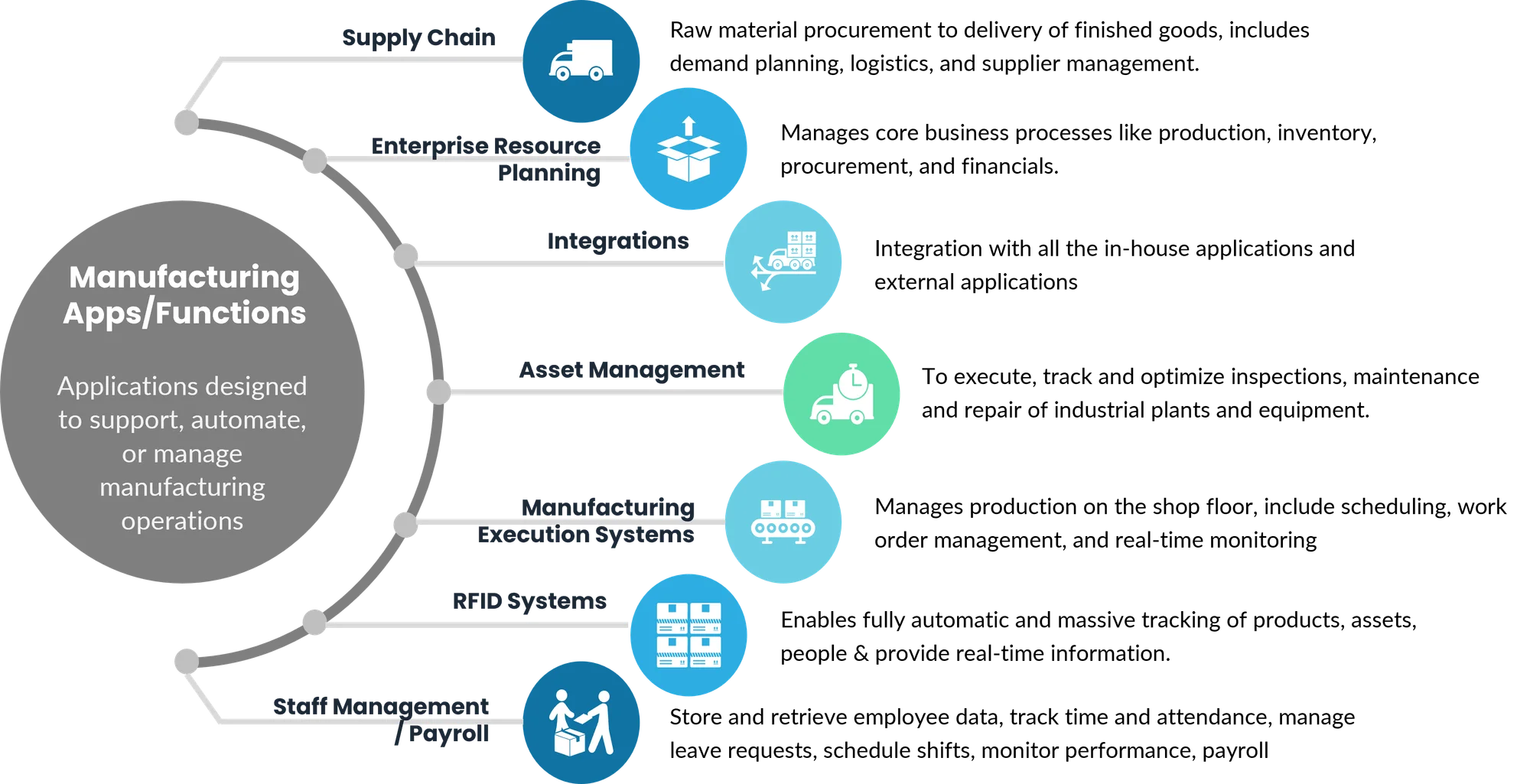
What Manufacturing Applications Look Like
A typical manufacturing landscape connects shop-floor systems, planning tools and enterprise platforms, and each link is a place where quality has to hold.
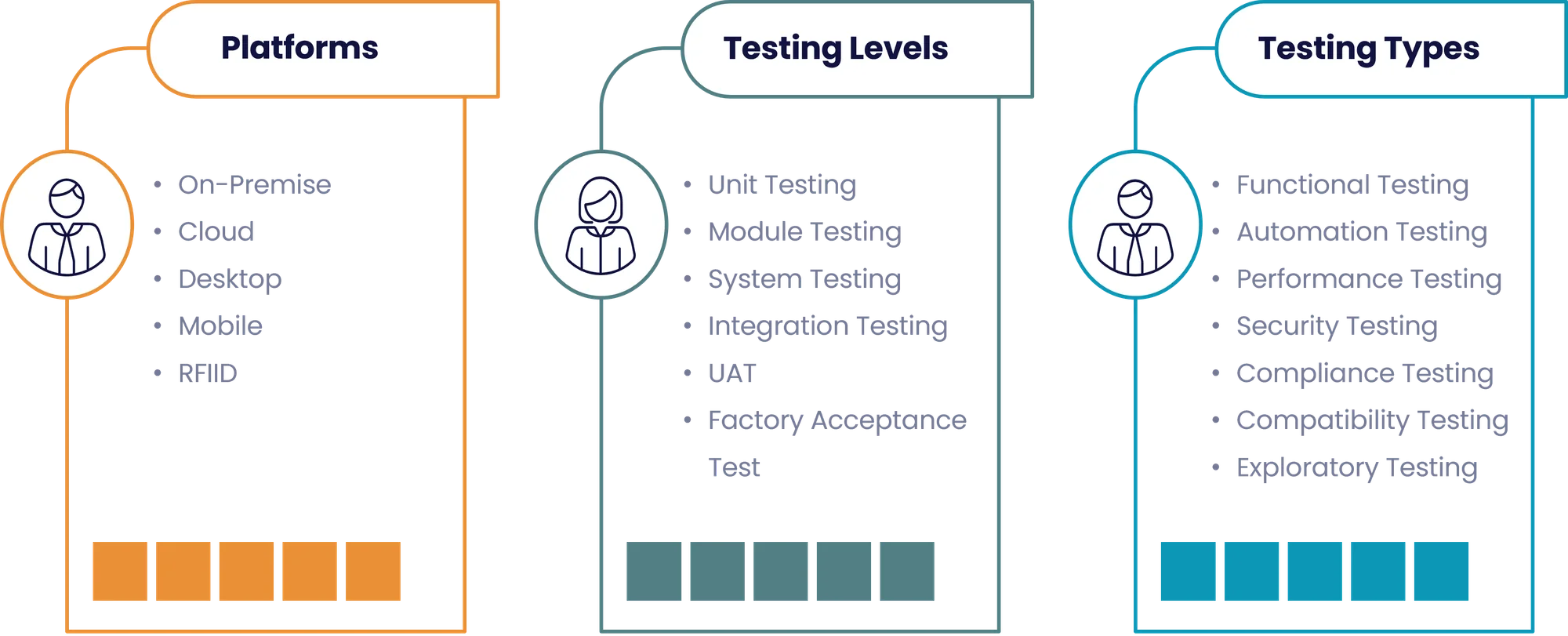
Our Testing Expertise
Key Challenges in Manufacturing Domain Testing
Complex Integrations
Testing integrations across multiple systems like ERP, MES, and third-party tools.
Regulatory Compliance
Keeping up with industry standards and certifications.
Customization
Many manufacturing systems are highly customized, which complicates testing.
Diverse Environments
Testing applications across diverse hardware and network setups, including IoT devices.
Complex Testing Environments
Maintaining a dedicated real-time testing environment with all integrations as in production.
Industry-Specific Standards and Compliance
Ensuring adherence to standards like ISO, which vary by region and sector.
Testing in the manufacturing domain is critical to ensuring software applications support business objectives effectively. By addressing challenges and implementing robust testing strategies, organizations can achieve operational excellence, maintain product quality, and ensure compliance with industry standards.